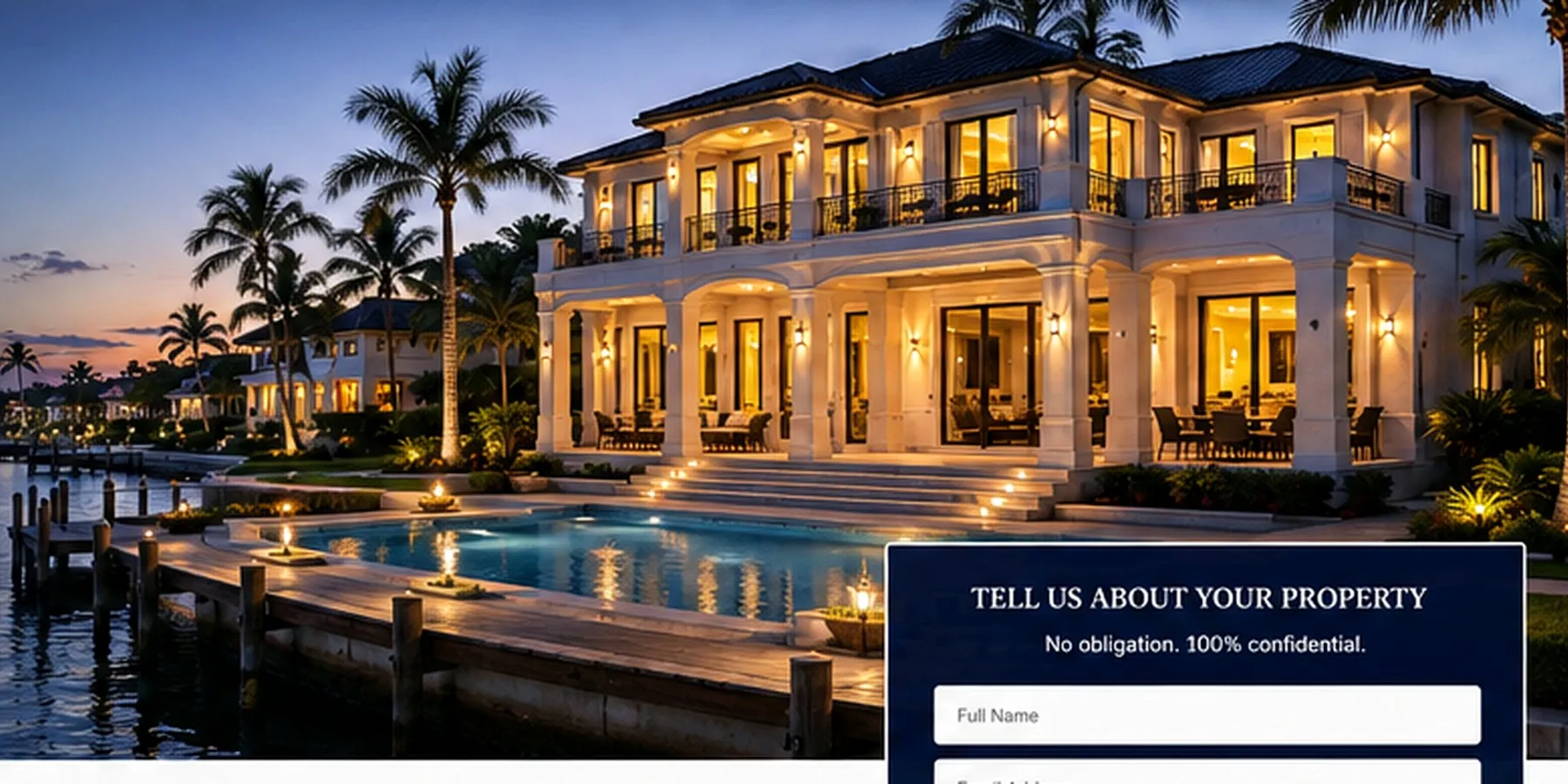
SECOND AND SEASONAL HOMES
Selling a Florida Luxury Second Home or Vacation Property
Second homes tend to be sold for practical reasons rather than financial ones: the visits got shorter, the family stopped coming, the carrying costs kept arriving. Selling one from eight hundred miles away is a different exercise from selling the house you live in.
REQUEST A PRIVATE PROPERTY REVIEWHow do you sell a Florida second home when you live out of state?
You can sell a Florida property remotely by either route, but the amount of coordination differs sharply. A public listing requires someone to manage access for showings and inspections, keep the property presentable, handle contractor questions and respond to a marketing process running in a state you are not in. A direct private sale involves one buyer, one evaluation and a closing that can generally be handled without you being present throughout. Private Luxury Home Sales purchases select Gulf Coast second homes and seasonal residences directly, in current condition and often furnished, which is why absentee owners make up a significant share of the enquiries we receive.
Why Owners Step Away From a Second Home
The decision is usually cumulative rather than sudden. Visits shorten from three months to three weeks. Grandchildren reach an age where they have their own summers. A health change makes the flight harder than it used to be. A boat gets sold and the dock stops earning its keep. The property has not become a bad asset; it has stopped being used enough to justify what it takes to keep.
Some owners also find the calculus changes after a storm season, or after a period when the house sat unoccupied and something went wrong that they had to solve from a thousand miles away. None of that is a crisis. It is simply the point at which an owner starts asking what selling would involve.
What Carrying a Gulf Coast Second Home Involves
Owners tend to have a clear view of the mortgage, if there is one, and a much vaguer view of everything else. Written out, the recurring obligations on a coastal luxury property typically include:
- Property taxes, generally without a homestead exemption on a non-primary residence
- Property insurance, with windstorm and flood coverage handled separately in coastal locations
- Association or condominium dues, plus any special assessments
- Landscaping, irrigation and pest control on a year-round schedule
- Pool service and equipment maintenance
- Air conditioning run through the summer to control humidity in an empty house
- Property management, key holding and welfare checks
- Storm preparation, shutter installation and post-storm inspection
- Dock, lift and seawall upkeep where the property is on the water
- Utilities that continue whether the house is occupied or not
We are not going to attach numbers to that list, because they vary enormously by property and we do not manufacture figures. The point is simply that the total is usually larger than the mental estimate, and it continues throughout however long a listing takes.
Absentee Ownership and the Practical Problem With Listing Remotely
Marketing a property in a state you do not live in means delegating almost everything. Someone has to let people in, respond to feedback, arrange quotes for anything a buyer raises, meet inspectors, and keep a house that nobody is living in looking like somewhere people would want to live. If the property is only lightly furnished, it may need staging. If it is fully furnished, it needs cleaning and resetting after every showing.
There is also a security dimension that seasonal owners take seriously. A publicly advertised, visibly unoccupied luxury home on a barrier island broadcasts two facts at once: that it is empty, and what is inside it. Our guide to privacy when selling a high-value property deals with that in more detail.
A direct purchase removes most of this. One evaluation visit, arranged with whoever holds the keys, and a closing that can be coordinated remotely.
Furnishings, Contents and Turnkey Property
Second homes are frequently furnished specifically for the property — pieces bought for those rooms, that light and that climate, which often have no place in the primary residence. Shipping them north rarely makes sense. Selling them individually from another state is a project in itself.
This is one of the areas where a direct sale offers flexibility that a listing does not reliably provide. What conveys with the property is a term to be discussed rather than an obstacle to be cleared first, and for a turnkey seasonal residence that can materially simplify the exit. Owners with rental furniture packages, kayaks, bicycles, golf carts and boat equipment usually raise this early, and they are right to.
Condition, Storm History and Selling As-Is
Seasonal properties often carry a particular condition profile: pool cages that took storm damage, docks and lifts that have not been used in a while, exterior finishes weathered by salt air, and mechanical systems that have run unattended for years. Add the possibility of unfinished insurance work or open permits and the pre-sale repair list can look daunting from out of state.
Selling as-is is a legitimate answer to that. We form our own view of the work required and reflect it in the terms rather than asking the owner to organise contractors remotely. The specific items that arise on waterfront parcels are set out in our guide to selling a waterfront home as-is.
Seasonal Timing and Rental Commitments
Timing is a real consideration for second-home owners in a way it is not for primary residences. Some owners want to enjoy one final season and close afterwards. Others want to be out before the next round of insurance renewals, association assessments or hurricane preparation. Owners who rent the property seasonally have booked commitments that need to be honoured or unwound.
A direct sale can generally be structured around those constraints, because the date is negotiated between the two parties rather than dictated by a third-party lender's schedule. Tell us the constraint at the outset; it is much easier to build terms around it than to adjust for it later.
When Listing a Second Home Makes Better Sense
If the property is well presented, in a market with active demand for that type of home, and you have reliable local representation to manage the process, a public listing gives it the broadest audience. Vacation and second-home buyers frequently search publicly, and a good campaign reaches them. Owners with the patience for it, and no particular concern about visibility, should weigh that seriously — and should ask for a realistic net figure after commission, preparation and the carrying costs that continue throughout the marketing period.
Where the balance shifts is when the coordination burden, the carrying cost of an unused property or the wish to avoid public exposure outweighs the value of maximum exposure. Our direct sale versus listing comparison lays the two out line by line, and selling without a listing explains the mechanics of the private route.
Second-Home Markets We Review
Seasonal and second-home enquiries reach us from across the barrier islands and coastal communities — Anna Maria Island, Holmes Beach, Longboat Key, Siesta Key and Lido Key, and in Pinellas County from St. Pete Beach, Treasure Island and Madeira Beach. Our earlier note on vacant second-home sales covers the unoccupied-property angle.
PRIVATE PROPERTY REVIEW
Review a Second Home Without Travelling Down
Describe the property, how it is currently used and whether it is furnished. The review is confidential, and the process is designed to work for owners who are not in Florida.
REQUEST A PRIVATE PROPERTY REVIEW 941-202-6957SECOND HOME QUESTIONS
Selling a Florida Second Home: Common Questions
Can I sell my Florida property without travelling down?
In most cases yes. The review and evaluation can be arranged with whoever has access to the property, and Florida closings are routinely completed remotely. Owners who prefer to be present for the final visit are of course welcome to be.
Will you buy a furnished second home?
Yes, and what conveys with the property is part of the discussion. For owners of turnkey seasonal residences, being able to leave furnishings that have no use in their primary home is frequently one of the more valuable aspects of a direct sale.
The house has been sitting empty. Does that matter?
It is very common and not an obstacle. Vacant seasonal properties often have humidity, landscaping, pool and system issues that accumulate quietly. We evaluate the property as it stands rather than expecting it to have been maintained as though occupied.
I have rental bookings for next season. Can I still sell?
Existing rental commitments are worth raising at the outset so the closing can be structured around them, or so the arrangements can be discussed openly. It is far easier to build terms around a known constraint than to work around it later.
Do I need to fix storm damage or finish an insurance repair first?
Not for a direct purchase. Unfinished repairs, open claims and outstanding permits are ordinary matters to discuss rather than tasks you need to complete from out of state before speaking with us.
Is a private sale better than listing a vacation property?
Neither is universally better. A listing reaches the many buyers who search publicly for coastal second homes and can create competition. A direct sale removes remote coordination, showings, preparation and continued carrying costs during a marketing period. The right answer depends on the property and on how much the coordination burden weighs on you.
CONFIDENTIAL PROPERTY REVIEW